Terrain and approach define the category
- Surface condition: ruts, aggregate, and grade changes shift selection toward rough‑terrain units with more aggressive tires and chassis clearance.
- Approach path: If access runs across unfinished ground or compacted base, plan for a machine built for exterior travel even if the work height is modest.
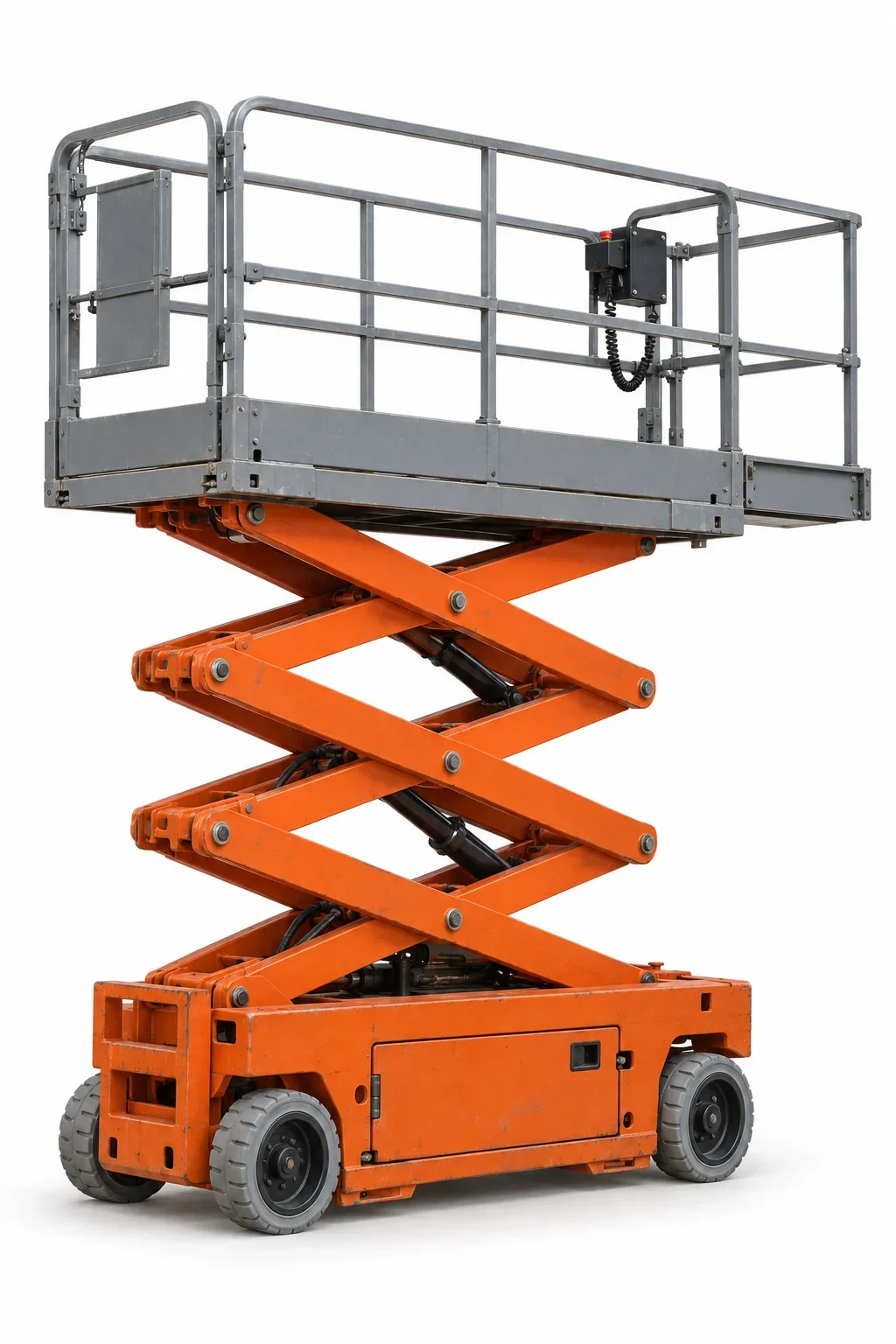
- Platform geometry: Choose this category when the task is directly overhead and a larger work deck improves productivity for multiple tools and materials.
Springfield considerations
- Hilly terrain on the Ozark Plateau increases the likelihood of uneven approaches and staging areas.
- Seasonal moisture affects soil firmness and traction; exterior tasks in the regional climate benefit from units designed for variable ground.
- Many local projects blend exterior shell work with later interior tie‑ins. Separating outdoor rough‑terrain use from indoor electric use can simplify planning.
Typical uses
- Fascia, canopy, and glazing work on commercial shells
- Exterior MEP runs, signage, and lighting over parking lots before final paving
- Service work at industrial sites where pads and yards are not fully finished
When another lift makes more sense
If the work sits behind obstacles—over landscaping, equipment lines, or roof overhangs—outreach becomes the priority. Compare options at /boom-lift-rental/ or the broader overview at /aerial-lift-rental/.
Nearby work areas
Surrounding communities share similar lot grades and mixed soil conditions. Expect the same traction and clearance needs outside of Springfield’s urban core.