Start with geometry and surface conditions
- Can the platform sit directly below the task, or is lateral reach required? If the work sits straight overhead with stable footing, a scissor lift is the simpler, wider platform choice. If outreach is needed around obstacles, consider an option at /boom-lift-rental/.
- Measure working height and allow margin for tooling and fixture clearance. Ceiling grid, sprinkler mains, and lighting often limit platform height indoors.
- Verify slab or deck capacity. Many Springfield warehouses and subsurface spaces demand low point loading; electric slab scissors spread weight efficiently.
Springfield factors that change the choice
- Regional climate: Humid summers and cool winters create frequent transitions between indoor and outdoor work. Electric units avoid emissions in enclosed areas; dual‑fuel or rough‑terrain units handle exterior tasks in variable weather.
- Terrain: On the Ozark Plateau, lots and utility yards can be sloped or rutted. Rough‑terrain scissors provide wider stance and traction; indoor slabs and underground corridors favor compact electrics with non‑marking tires.
- Facility access: Local distribution buildings run long aisle lines and high‑bay racking. Tight turning radii and folded guardrail heights matter for doorways and freight elevators.
Narrowing the scissor category
- Indoor maintenance and inventory: Look at /electric-scissor-lift-rental/ for compact, low‑emission units that fit standard aisles and dock doors.
- Exterior builds and unfinished sites: See /rough-terrain-scissor-lift-rental/ for higher ground clearance and platform capacity suited to uneven ground.
- Mixed environments: If the task moves between a climate‑controlled space and a lot outside, compare power sources and tire types to match emissions and traction needs.
When a scissor isn’t the fit
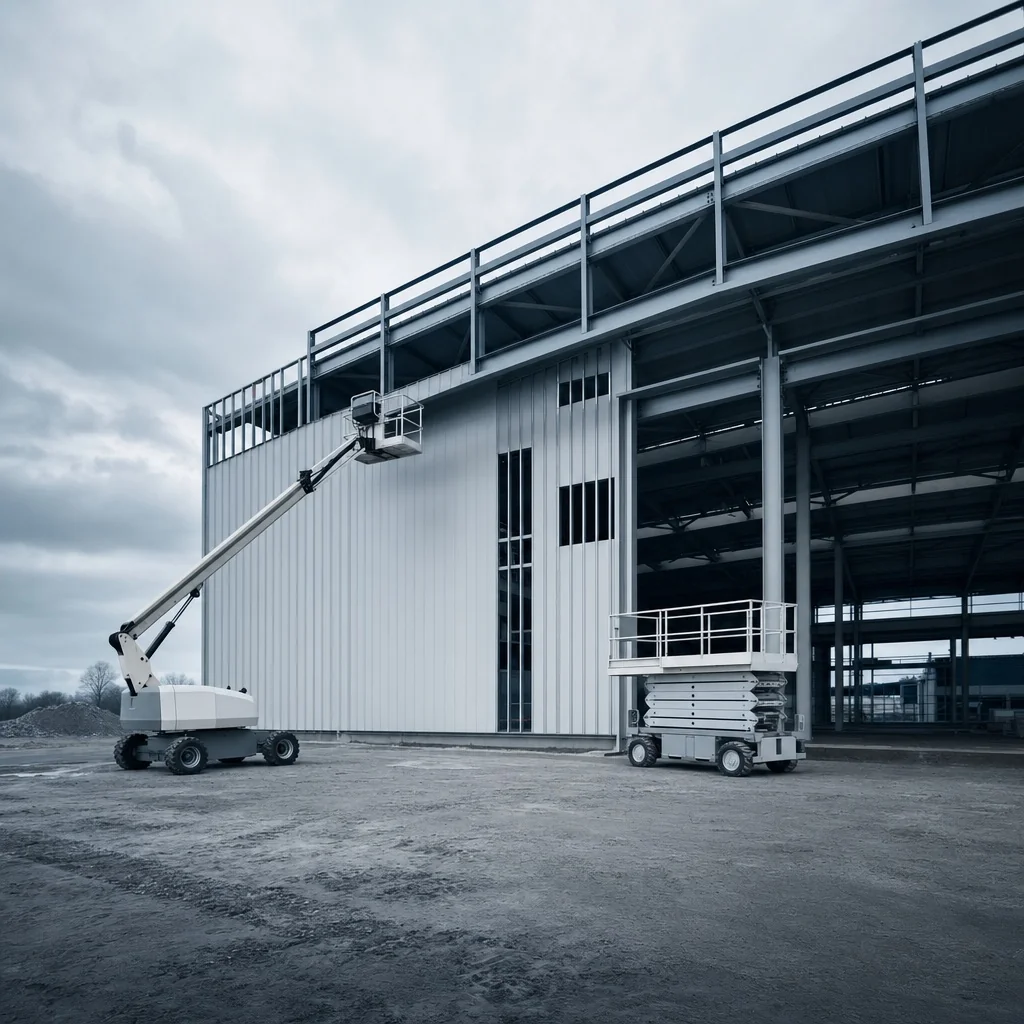
If the work requires reaching over conveyors, mezzanines, or landscaping, an aerial boom may be more efficient. Compare options at /aerial-lift-rental/ or go directly to /boom-lift-rental/ for articulating and telescopic models.
Nearby work areas
Projects in communities around Springfield often share the same constraints: compact interiors in commercial parks and rolling ground outside. The same electric‑versus‑rough‑terrain decision pattern applies.